
HOW IT WORKS
Founded on decades of green chemical research, UWIN Nano Europe delivers proprietary chemical formulations that recover critical metals through eco-friendly processes at industry-leading efficiencies.
Step 1
Book a Consultation
Use the contact form or send us an email to schedule a consultation with one of our experts. We'll discuss your e-waste recycling needs and explore the best solution for your operation.
Step 2
Send us a Sample.
Submit a sample of your e-waste or recycling stream. Our team will analyse the material composition to understand your specific recovery requirements.
Step 3
Customised Chemical Solution.
We develop a tailored chemical solution optimised for your e-waste type and recovery goals. Our eco-friendly formulations maximise material recovery.
Step 4
Implementation.
Deploy the solution at your facility. We provide technical support and guidance to ensure seamless integration of our chemicals into your recycling operations.
PRINTED CIRCUIT BOARD ASSEMLY RECYCLING
PCBAs (Printed Circuit Board Assembly) contain various electronic components such as ICs, CPUs, processors, connectors, and other valuable parts.
For these materials, we typically recommend the following recycling process:

1. Desoldering
(Thermal/Hydrometallurgical Method)
Remove solder to separate electronic components from the PCB substrate.

2. Sorting
Use our sorting system to classify and collect target components with higher precious metal content.

3. Tin Stripping
Our proprietary SnST-550 Tin Stripper removes the tin as residual tin can negatively affect the final gold purity.

4. Carbonisation
Carbonise ICs, CPUs, and processors to eliminate resin-related interference during subsequent processing.
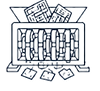
5. Shredding
Reduce materials into fine particles to maximize metal extraction efficiency.

6. Acid Washing
Remove Impurities and unwanted contaminants.

7. Filtration
Collect the solid material for further processing.

8. Gold Leaching
Extract gold using our patented UW-860 Gold Stripper.

9. Filtration
Separate the gold-bearing solution from the remaining solids.

10. Gold Reduction and Purification
Chemically precipitate sponge gold from the solution and further refine it.

11. Gold Ingot Production
Melt the refined gold using a high frequency furnace to produce gold ingots.
PRINTED CIRCUIT BOARD RECYCLING
Bare PCBs usually contain surface gold plating without electronic components. In this case, the gold can be directly extracted using our patented gold stripping chemical, UW-860 Gold Stripper.
-
Removes gold (Au) layer
-
Corrosion on Ni or Cu, but no effect
-
Wide operational range
-
Functions at room temperature
-
High strip amount with 13g/L, much higher than cyanide or aqua regia

Bare PCB
Soak in UW-860 Gold Stripper
30°C, 3 minutes


PCB with gold totally removed
Pure Gold
BATTERY RECYCLING
Our hydrometallurgical technology recovers lithium, cobalt and nickel from waste batteries in a safe, eco-friendly process:


1. Dismantling
Separate the outer shell from the inner battery cell unit.
2. Discharging
Discharge battery cells using our UW-Discharging Agent.
3. Crushing
Reduce cell material to smaller fragments.
4. Shredding
Further reduce particle size for uniform processing.


5. Sorting
Separate black mass from aluminium foil and other impurities
6. Leaching
Leach lithium and cobalt using our UW-530 stripper.
7. Filtration
Separate solid waste from liquid.

8. Chemical Reduction and Purification
Use chemical precipitation to obtain lithium hydroxide, lithium carbonate or cobalt sulphate depending on end-use requirements.
RARE EARTH METAL RECOVERY
Traditional rare earth metals use a large amount of toxic or hazardous substances during processing. UW-170 eco-friendly rare earth stripper is non-toxic and cyanide-free chemical. It does not include fluoride and mercury.
There are 17 kinds of rare earth metals that can be stripped at the same time with a safe operation and high-efficiency leaching rate.
We typically recommend the following recycling process:




1. Shredding and Crushing
Reduce ore particle size to at least 50 mesh for uniform processing.
2. Enrichment
Increase metal concentration in the ore.
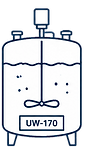
3. Leaching
Use our UW-170 rare earth stripper to leach rare earth metals whilst stirring.
4. Filtration
Separate solid waste from liquid. The liquid stream contains the target rare earth metals.
5. Reduction and Purification
Process to your desired final form depending on end-use requirements – complex or pure metal state.
SOLAR PANELS
Silver can be extracted from solar panels using out AgST-350 silver stripper.
We typically recommend the following process:




2. Shredding
1. Dismantling
3. Sorting

5. Filtering
6. Reduction
7. Burning
4. Leaching Silver using AgST-350


Air Pollution Treatment
High Purity Silver Clay
Recycled Silver